Legal Protection of Personal Images

Legal Protection of Personal Images

Legal Protection of Personal Images

Mar 18, 2026

Dr. Salma Bashasha

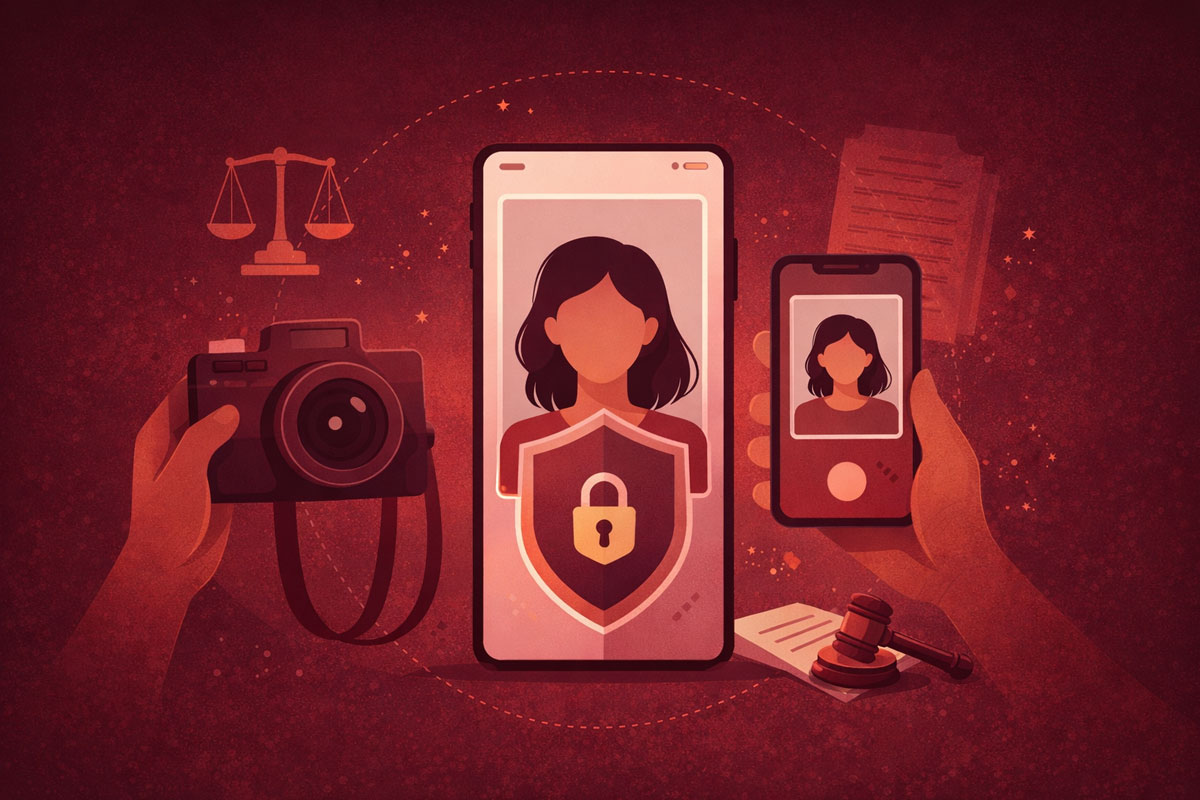
Images and videos have become an essential part of modern life, especially with the widespread use of social media platforms. Today, visual content can reach millions of people within seconds. While this technology offers many benefits, it also presents serious risks when misused.

Some individuals manipulate images or videos to alter facts and create a reality that suits their intentions. With the rapid advancement of artificial intelligence tools and image-editing applications, it has become easier to falsify images, distort their meaning, and place individuals in difficult legal or social situations.

This growing phenomenon has created significant concerns, particularly because the ease of capturing and publishing images has led to frequent violations of personal privacy. The harm becomes even greater when individuals who manage digital platforms repost such images without understanding the legal consequences. As a result, the content spreads rapidly across digital spaces that increasingly function as a parallel world to our real lives.

The Right to Personal Image

The law provides comprehensive protection for a person's image as one of the most important aspects of the right to privacy. This right is protected by constitutions and legislation in many countries.

In principle, no one may photograph, record, edit, transfer, or publish an image or video of another person without their permission or legal authorisation. Any violation of this principle may expose the offender to legal consequences.

Legislators have criminalised such actions through criminal law and cybercrime legislation. The penalties imposed can include:

  • Imprisonment

  • Financial fines

  • Confiscation of devices used in committing the offence

  • Deletion of the images or videos involved

In certain circumstances, the penalties become more severe, particularly when the act is accompanied by an intention to harm, defame, or blackmail another individual.

Restrictions on Filming Sensitive Locations

Special caution must be exercised when photographing or filming sovereign, government, or security-related facilities. Publishing such images without authorisation can lead to serious legal consequences.

Similarly, producing or sharing content that:

  • Offends public morals

  • Defames a country or its citizens

  • Violates societal values

may also constitute a criminal offence.

Additionally, the filming or publishing images of minors in a manner that violates their privacy or threatens their safety is strictly prohibited and punishable by law.

Photography Without Consent

Photographing individuals without their permission is considered one of the most serious violations of the right to personal image.

Legislation in some jurisdictions distinguishes between photography in private places and photography in public places. In certain legal systems, photographing someone in a public place may not be considered a violation if the person appears unintentionally in a photograph and their privacy is not compromised. For example, a person appearing incidentally in the background of a personal photograph taken in a public area may not constitute an offence.

However, some countries have adopted stricter approaches. In these jurisdictions, taking, publishing, or altering a person's image without their consent may be considered a punishable offence regardless of whether the photograph was taken in a public or private place.

In such cases, the determining factor is not the location but the intent behind the act.

Legitimate Situations for Photography

There are certain situations in which photographing or recording images is considered lawful. These include:

  • When the individual being photographed has given clear permission or consent

  • When the photography is conducted with legal authorisation

  • When documenting a crime for the purpose of reporting it to authorities, provided that the images are not published or circulated publicly

Even in such situations, the images must be obtained through lawful means. For example, it is not permissible to spy on individuals in their homes in order to capture evidence of wrongdoing.

A Simple Rule to Remember

In today’s digital age, where images can spread rapidly and permanently, respecting the privacy of others is more important than ever.

As a general rule, it is both wise and legally safer not to photograph or publish images of others unless you have obtained their clear permission

Book a consultation

Get in Touch

Whether you are looking for legal guidance, counselling support, or corporate assistance, please fill in the form and our team will get back to you.

Email  info@drsalmabashasha.com

WhatsApp  +971 50 950 6351

Book a consultation